VoidLoop
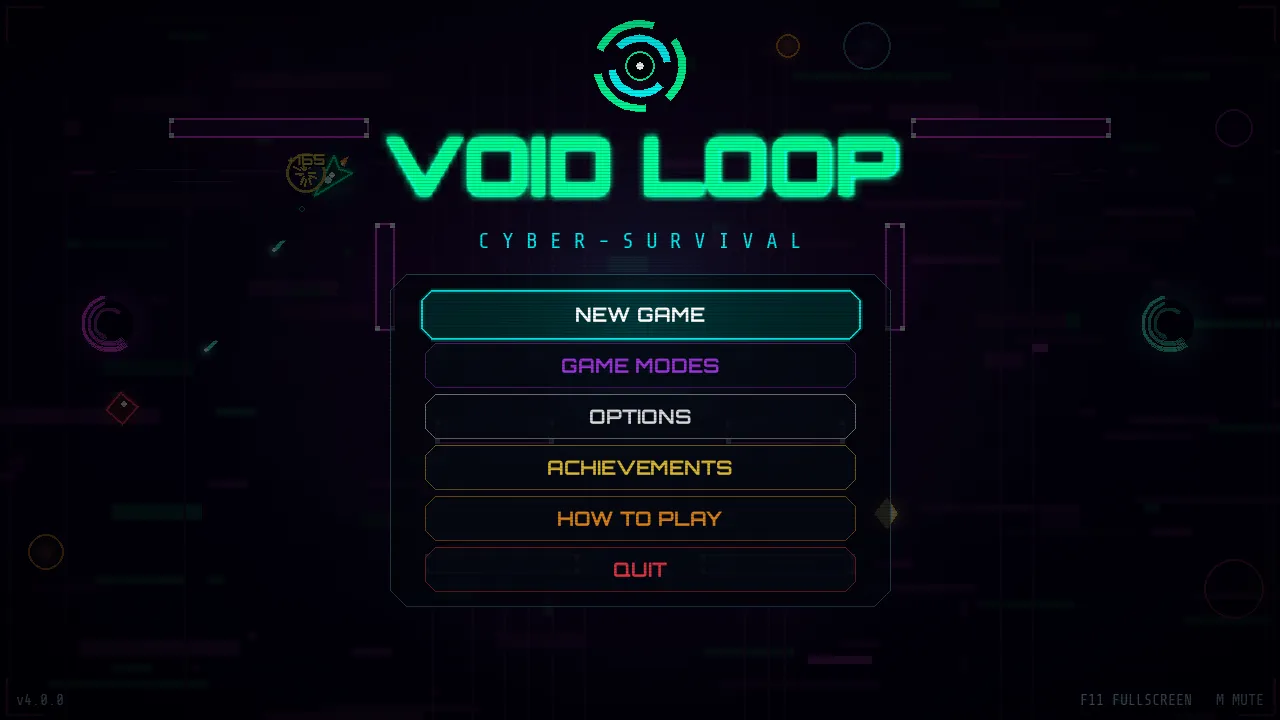
A neon arcade shooter in Python and pygame: six sectors, six bosses, a story in four languages and installers for Windows and Linux.
Context
VoidLoop was a small pygame game I made a while ago, almost entirely in a single file. I picked it up again and rewrote it as a proper Python package: the goal was to make it prettier, more varied and more fun, and to have it run on Windows and Linux without installing anything extra.
What I built
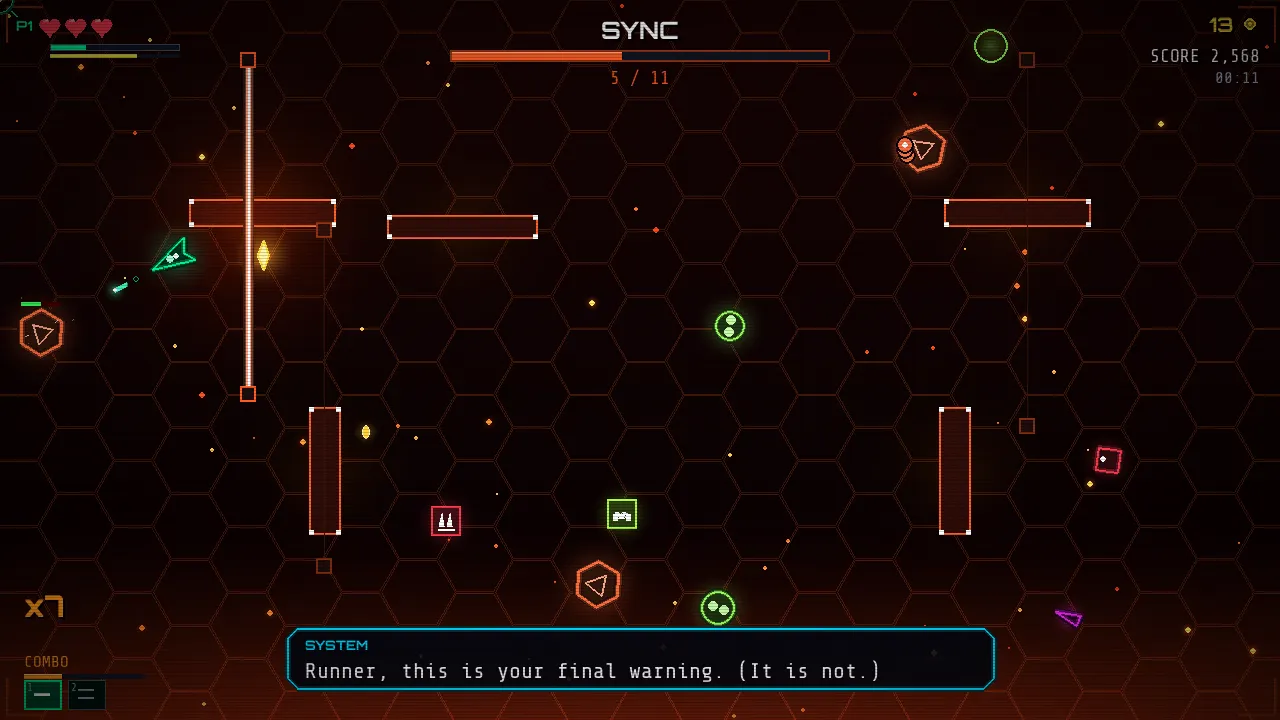
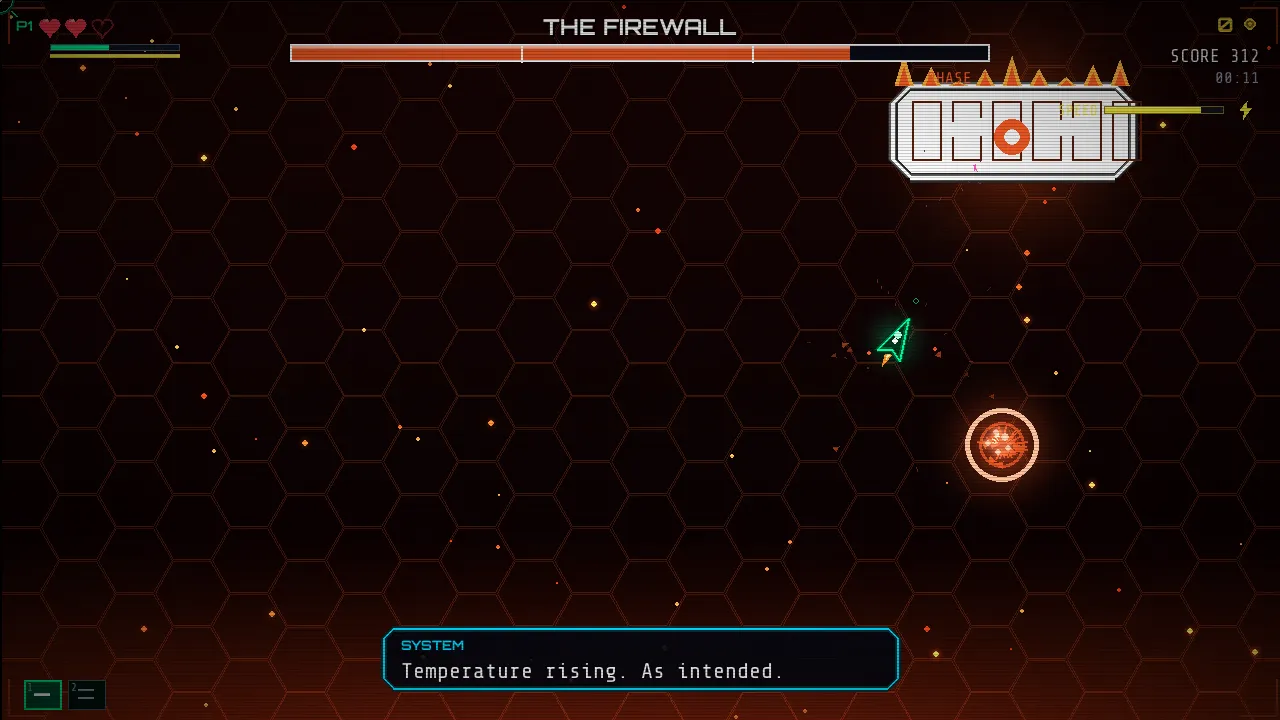
Six animated sectors, each with its own hazards, six multi-phase bosses, six enemy types, dash, pulse and combos, a weapon shop and eight power-ups. There is a Story campaign plus Endless, Time Attack, Boss Rush and Horde, with two-player co-op. The story has three voices (ECHO, SYSTEM, VOID), two endings and a New Game+, in Italian, English, Spanish and French.
Graphics and audio are procedural: the neon effects are drawn in code, and sounds and music are synthesized on the fly, with no external audio files.
Technical choices
The simulation runs on a fixed 60 Hz step and is separate from rendering: the game world takes an abstract input, so it can be tested without a window and played by a bot. I used the bot to balance the difficulty and wrote a test suite (170+ tests) that includes full runs through to the credits.
The game ships as a portable .exe and an .msi installer for Windows and as a tar.gz, .deb and AppImage for Linux. A GitHub Actions pipeline builds everything and, before trusting it, silently installs the MSI, launches the installed game and uninstalls it. It also caught a real bug: the first version of the MSI installed only the executable, without its libraries.
Status
Finished. You can download it and play: the Windows and Linux builds are in the GitHub releases. Maybe in a few years, if I feel like it, I’ll update it.